
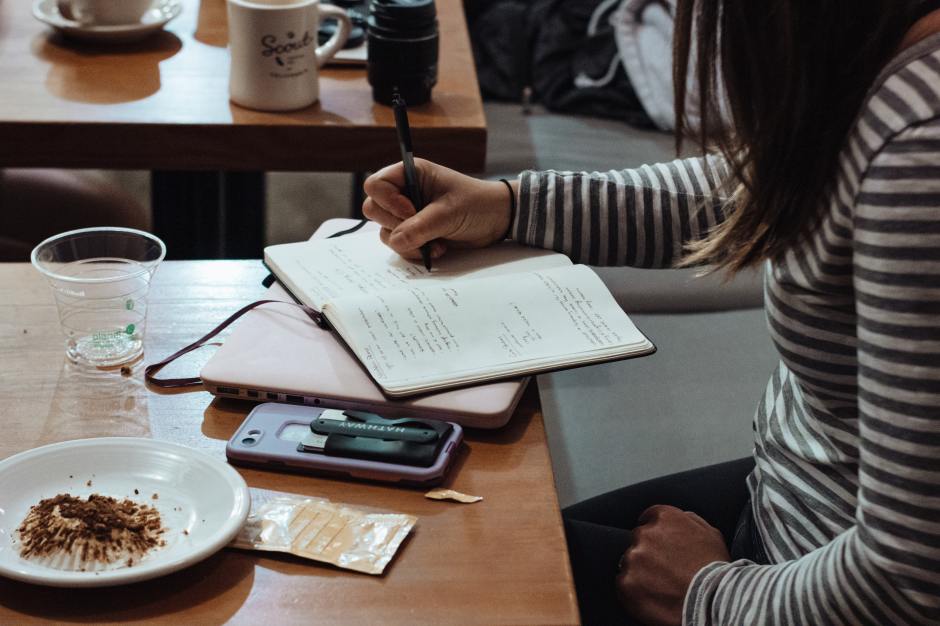
Quite the balancing act…
5-7 mins read
Disclaimer: These are all my opinions and thoughts only – not backed by science!
After undergoing four years of heavy test-taking in college, I decided to pursue a finance certification when I started my full-time job. Three years later, I’ve taken an exam every year for the past three years post-college (fun!). Right now, I’m also studying for another exam next week. In light of COVID-19, I’m not certain whether the exam will be postponed, but I’ve been studying rigorously to prepare for it!
Working full-time and studying for an exam is a balancing act. It’s hard, but very possible. It does, however, take planning and discipline. You definitely want to study as much as you need in order to pass the exam, since you don’t want to take it again!
I’ve developed some good study tips over the past years that will be helpful if you’re working full-time and studying for an exam. These tips can also be used if you’re currently a working student or studying for an admissions test (such as the GMAT or GRE).
Consider following my blog to be in the know for my future posts. Click the Follow button on the top right-hand side (desktop) or bottom right-hand side (mobile).
Below are some tips to study more effectively while working a full-time job:
1. Schedule your time meaningfully
Set yourself up for success by planning your schedule ahead of time. If you know when the exam or test is scheduled, determine what and when you will study.
For instance: let’s say the exam is a month away. Schedule out (in your calendar or planner) when to study certain topics. Allow yourself time for review and to take practice exams. I like to take practice exams on the last four weekends leading up to the exam, so I have time to review questions I missed.
I also recommend to study topics that have largest weights first, to ensure you’ll capture the most points during the exam. You’ll get more points with the same amount of study time if you plan out your studying this way.
2. Set aside a block of time every day after work to study
I like to study for 1-2 hour blocks of time after work, and I do it after I first work out. I find that this length of time helps me to focus on the test material and I don’t get too tired while doing so. I used to be able to study for a longer time when I was in college (3-4+ hours per day and almost all day on the weekends – crazy, I know!). But after a long day working, it gets more challenging to focus on your studies.
I also discover that I‘m able to remember more if I study every day, instead of skipping days and making up for them by studying longer. Even if you can only study for 30 mins on a couple of days, that’s OK. On some days, I only have time to review my flashcards (see Point #4 below).
3. Study & Summarize Technique
When you read a passage that has some key items, summarize the passage in your own words and write it down in your notes. I find this technique to be very useful to help with my memory retention. Something about summarizing and writing things down does the trick for me.
I also find that saying things out loud can help my brain better remember things. Maybe, you just need a different way to absorb the material. It might feel weird at first, but give this a try!
4. Use flashcards effectively
I recommend making flashcards and reviewing them either 1) the first thing you wake up or 2) before you go to sleep. This tip seems to help me with my memory retention.
For one of the exams I took, I had a stack of flashcards that equaled to 3 inches tall (sad, but not a joke)! When I had too many flashcards to review all of them on the same day, I would break the flashcards out by topic, and reviewed 2 topics per day. Aim to have the two very different topics (or as different as possible) to challenge your memory retention. It took me about 15 mins per day to review my flashcards.
5. Staying focused
It’s so easy to get distracted while studying. It only takes a text message or notification to get sidetracked from your studies!
Here are some tips to help you stay on track:
- Close out all your tabs on your laptop that are not related to your studies
- Mute your phone notifications and messages
- Take breaks every so often, but not too often. TSF note: Some people like to take breaks every 30 mins, but I prefer to take breaks every 45 mins – 1 hour. I find that I am able to study more effectively during this length of time. When I know how long I have until I can take a break, it gives me more motivation to study since there is an end goal. Give this a try by setting a timer for 45 mins, and really try to study hard with no distractions. You may want to experiment with the amount of time you need before taking a break to avoid mental fatigue!
Hope your studying goes well, you smarty femme! Let me know what tips you like in the comments.
Consider following my blog to be in the know for my future posts. Click the Follow button on the top right-hand side (desktop) or bottom right-hand side (mobile).





 The Smarty Femme